
About the Marion County Circuit Court Records Department
The Marion County Circuit Court Records Department is part of the state court, not the Marion County Clerk's recording office. It handles copies from Circuit Court case files, helps route audio and transcript requests, maintains public access terminals, and answers questions about older court records. The records lobby is on the first floor of the downtown courthouse, and the court identifies 503-588-5101 as the records contact number.
The split is important in Marion County. The County Clerk preserves recorded documents, marriage records, archives, passports, elections, and related county records. Criminal case files, probate case files, divorce judgments, civil judgments, and Circuit Court traffic cases remain with the court records office. The County Clerk's own licensing and recording page directs court questions to Circuit Court and Justice Court rather than treating recorded-document staff as the case-file custodian.
The records office is also the place where the difference between online case information and court documents becomes practical. OJD search and OJCIN/OECI can help a person confirm a case number, court, filing date, hearing activity, or case status, but the register does not provide every filed document as a free public download. When a reader needs the actual judgment, order, petition, motion, probate filing, divorce document, or criminal case copy, the request moves to the Marion Circuit Court Records Department.
Marion County Circuit Court Records Department
100 High St. NE, First Floor
Salem, OR 97301
503-588-5101
Monday-Friday, 8:00 a.m.-5:00 p.m., excluding holidays
Mailing address: Marion County Circuit Court, P.O. Box 12869, Salem, OR 97309
What the Records Department Handles
For court records, the department is the practical local fallback after OJD online search or OJCIN. It does not replace the case register, but it is the office that can process document copies when the requester knows the case number and exact documents or hearing dates. Court staff may answer procedural questions, but cannot give legal advice or tell a requester what to file.
- Copies from Marion County Circuit Court civil, criminal, family, probate, traffic, and other case files.
- Certified and exemplified copies of filed court documents when the record is public or the requester has authority.
- Public terminal access for most nonconfidential case information in the records lobby.
- Routing for audio recordings and transcript requests tied to specific hearing dates.
Oregon's statewide search structure gives readers several starting points. The free OJD records and calendar search can provide basic case and hearing information when available. OJCIN/OECI is the subscription system for fuller Register of Actions access. The local Records Department is used when copies, older records, or staff review are needed.
Marion's request pathway is especially important for case types with mixed public and restricted material. A family case may have a public judgment but protected financial or child-related details. A probate conservatorship may have public docket activity while particular protected-person information is restricted. A criminal case may have public filings, but set-aside or sealed records are treated differently after a court order. The Records Department is the office that screens those requests against court access rules.
The Marion County Licensing and Recording page is useful for confirming that county recording and court case records are routed to different offices.
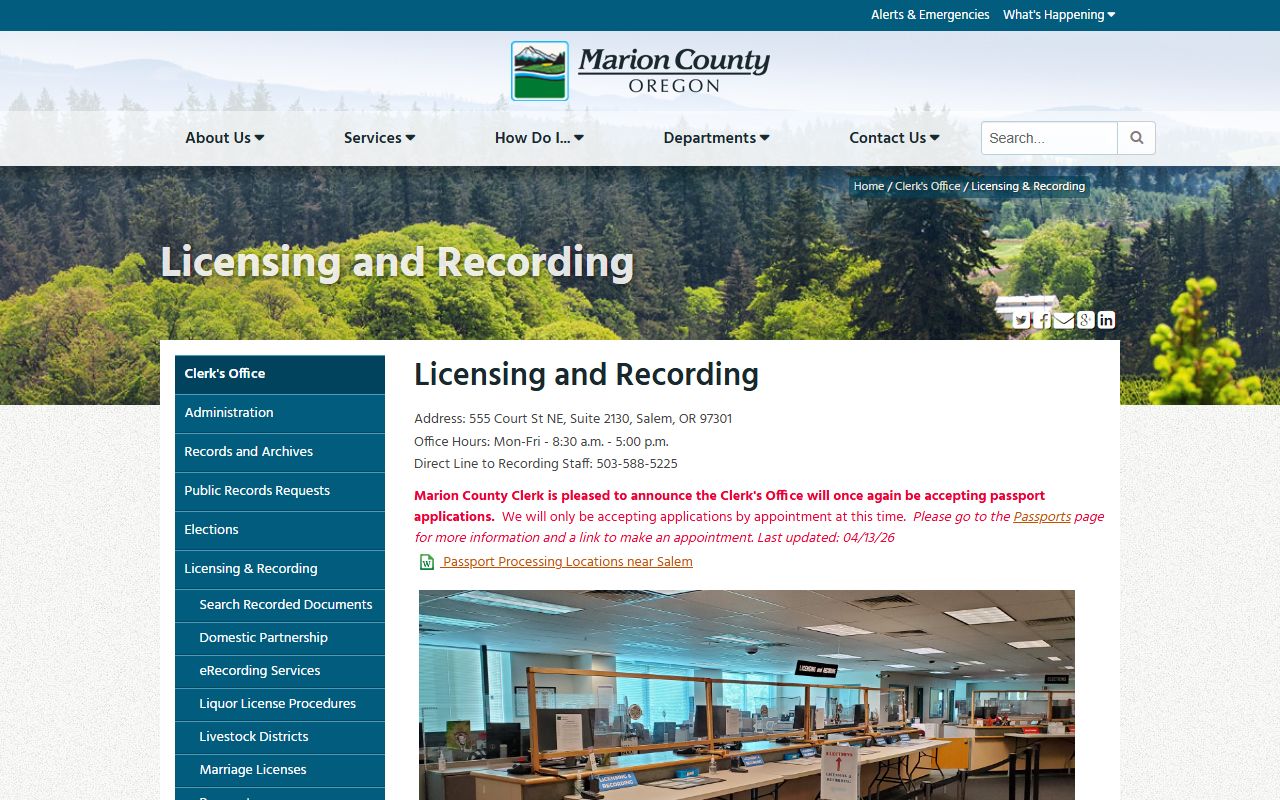
That county page is useful mainly because it shows the routing distinction: recorded documents go to the County Clerk, while court case questions are referred to court offices.
How to Request a Certified Copy
A certified copy is used when a requester needs the court to verify that the copy matches the filed record. An exemplified copy adds a higher level of authentication and may be requested for out-of-state or formal use. Marion's copy instructions distinguish standard paper copies, certified paper copies, exemplified paper copies, electronic copies, and audio recordings.
- Find the case number through OJD search, OJCIN/OECI, court paperwork, or the Records Department.
- Identify the exact document, judgment, order, filing, or hearing date needed.
- Submit the Marion Circuit Court records request online, by mail, or through the records office.
- Pay the copy fee and any mailing, CD, or media cost that applies to the delivery method.
- For electronic certified or exemplified copies, print in color and do not alter the certification. For paper certified copies, do not remove the staple.
Records Request Form Fields
Marion's records request instructions emphasize specificity. A broad request such as an entire case file can be slower and more expensive than a request for a judgment, order, petition, register entry, or hearing audio on a known date.
For mailed and online requests, include enough contact information for staff to quote costs, clarify document names, and arrange delivery. If the request is for audio, the hearing date is as important as the case number because audio is organized around the proceeding that was recorded. If the request is for a certified or exemplified copy, say that up front so the office can apply the correct fee and certification method rather than preparing a standard copy.
| Field | Required | Notes |
|---|---|---|
| Case number | Strongly recommended | Use OJD, OJCIN, or court paperwork to avoid delays. |
| Party names | Yes | Include names used in the case, such as plaintiff, defendant, petitioner, respondent, or protected person. |
| Document or hearing date | Yes | List exact documents or hearing dates for audio requests. |
| Copy type | Yes | Standard, certified, exemplified, electronic, paper, audio, or transcript routing. |
| Requester contact | Yes | Needed for payment, delivery, questions, and any confidential-record review. |
The Marion County Records and Archives page documents county archive systems that are separate from Circuit Court case copies.
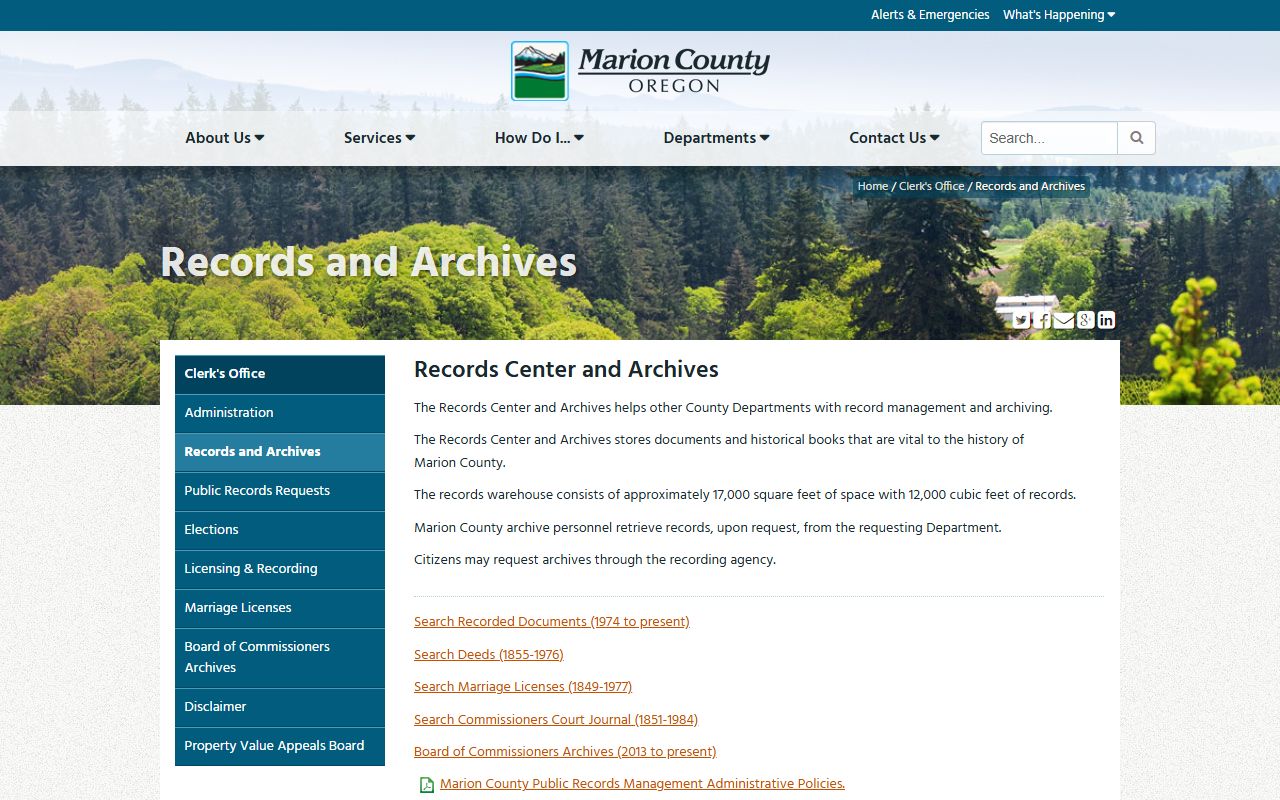
Use those archive tools for county historical records, and use the Circuit Court records office for court case files and court-certified copies.
Marion County Court Copy Fees
The fee path depends on format and certification. The research file identifies the court's copy schedule for paper, electronic, audio, mailing, and media costs. Mailing is actual cost, and emailed delivery has no additional charge.
| Item | Amount |
|---|---|
| Paper standard copy | $3.00 plus $0.25 per page |
| Paper certified copy | $5.00 plus $0.25 per page |
| Paper exemplified copy | $10.00 plus $0.25 per page |
| Electronic standard copy | $3.00 per request |
| Electronic certified copy | $5.00 per request |
| Electronic exemplified copy | $10.00 per request |
| Audio hearing electronic recording | $10 per day or hearing |
| CD | $1.00 |
Public Terminals and Older Records
Local circuit courts provide free public terminals for most case information that is not confidential. Marion's local details note six public terminals in the records lobby, available Monday through Friday from 8:00 a.m. to noon and 1:00 p.m. to 5:00 p.m. Terminals are useful when online search is unavailable, when a requester needs to confirm a case number, or when staff need to point a person to the correct record channel.
Older records may require staff assistance. Marion Circuit Court says records from 1987 to the present are available in physical or digital form. Limited pre-1987 records dating back to 1910 are in the court's microfilm system. Limited audio recordings are held from 2001 to the present. The court also notes format differences for audio: pre-2017 audio is MP3, while audio from 2017 forward is WMA.
The terminal schedule matters because it gives researchers a courthouse option that does not depend on subscription access. A person can use the lobby terminals to narrow a request before paying for copies, then ask for the exact documents needed. For older cases, staff may need to check physical files, digital records, or microfilm, so a request should include party names, approximate filing year, case type, and any old case number from prior paperwork.
The Marion County legacy records applications also show why older searches may move outside a modern case portal.
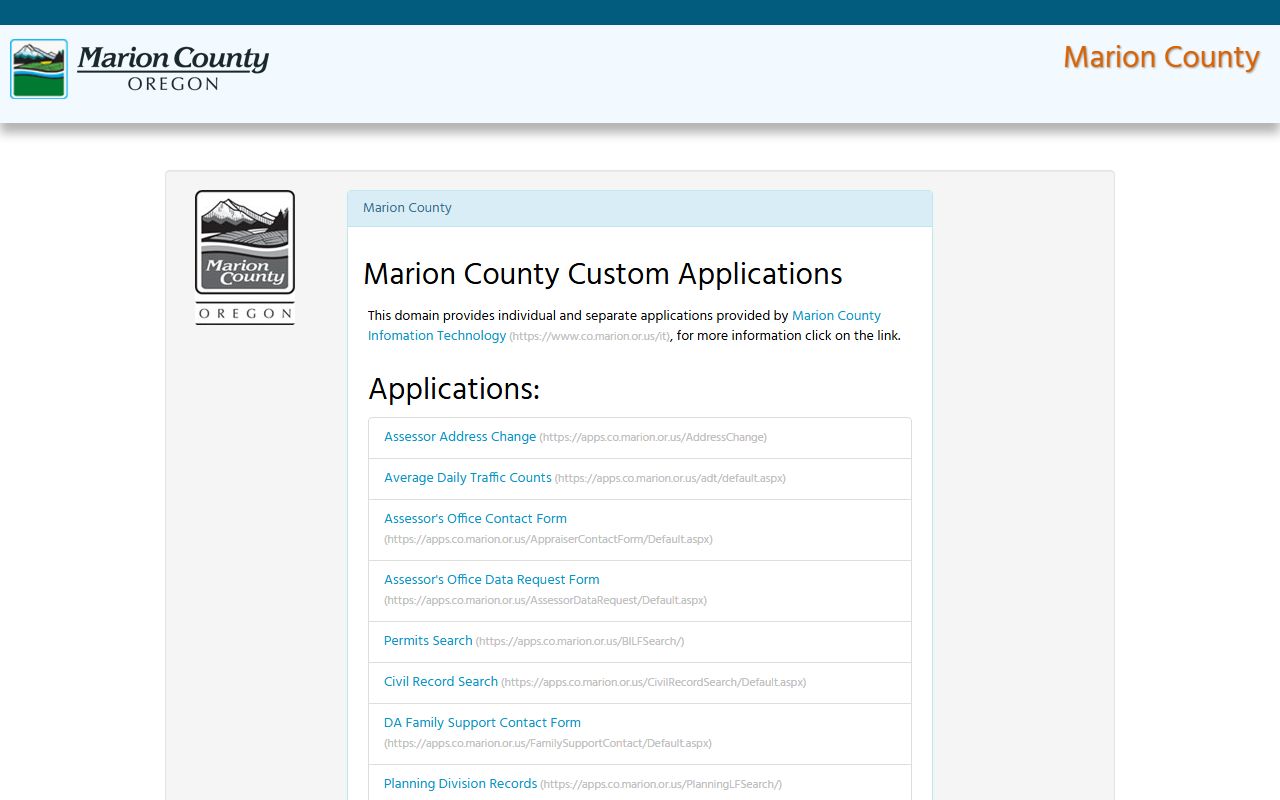
Those archive links can help with historical county records, while the court records office remains the source for Circuit Court case-copy questions.
Audio and Transcript Routing
Audio is requested through the court's records process when a hearing recording exists. A transcript is different: it usually requires the correct hearing information and a court reporter or transcription process rather than a simple document copy. Requesters should identify the case number, hearing date, judge or courtroom if known, and whether they need audio or a written transcript.
Confidential hearings, juvenile matters, adoption records, mental health records, sealed cases, and VAWA-covered matters may require legal authority or a court order before access is granted. Oregon public records law in ORS Chapter 192 supports access to nonexempt public records, but Chapter 192 and court rules also preserve exemptions and redactions.
Audio requests should not be treated as a shortcut to all courtroom information. The court's research notes limited audio availability from 2001 to the present, and the format depends on the recording year. A written transcript may require additional routing beyond the copy desk, while an electronic recording has its own per-day or per-hearing fee. If a hearing was confidential, involved a juvenile matter, or was sealed by order, the same access limits that apply to documents can also affect audio or transcript availability.
Oregon's public-records statutes explain the broader access framework that applies before court-specific restrictions are considered.
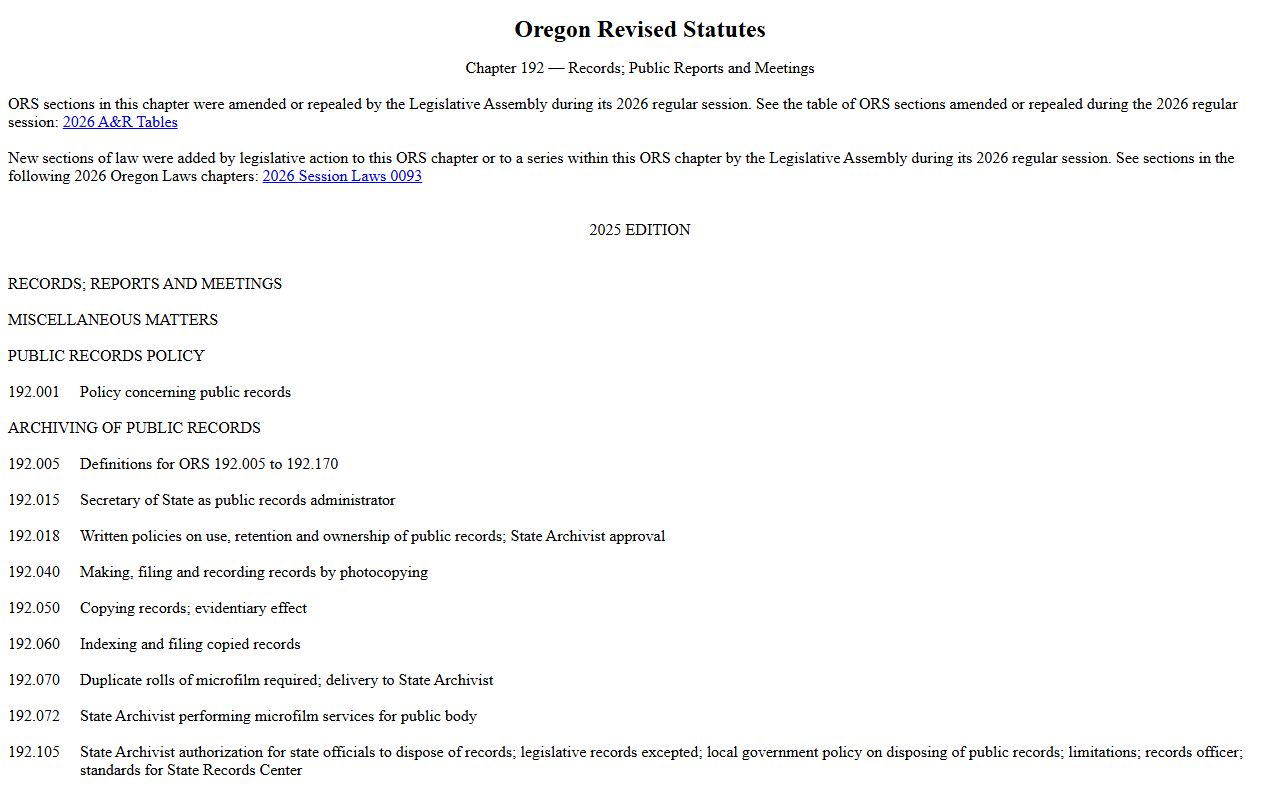
For Marion court case files, the practical rule is to search the register first, then request copies through the Circuit Court Records Department when the record is public or access has been authorized.
Public Record Search
Sponsored Results