
Marion County Arrest Records and Charges
Marion County arrest records are created on the custody side of the system. Jail Viewer may show public booking information configured by the jail, personal descriptive information, and offenses charged by the arresting agency. The Sheriff's adult-in-custody page tells users to use the jail roster for people in Marion County Jail and call the jail when the public report does not answer the question. Booking photos are no longer provided on the jail roster beginning January 1, 2022 to comply with HB 3273.
Court charge records begin when the prosecutor files formal charges in Circuit Court. The District Attorney decides what charges to pursue after review. Those filed charges become part of the criminal court case, where the Register of Actions can show arraignment, pleas, amended counts, dismissals, disposition, sentence, and financial obligations. For the full case file and final outcome, use Marion County criminal court records; for custody status and roster searches, Jail Viewer is the booking-side source.
The assigned image from the Marion County Jail Viewer warning source shows the public entry point for booking-side arrest information.
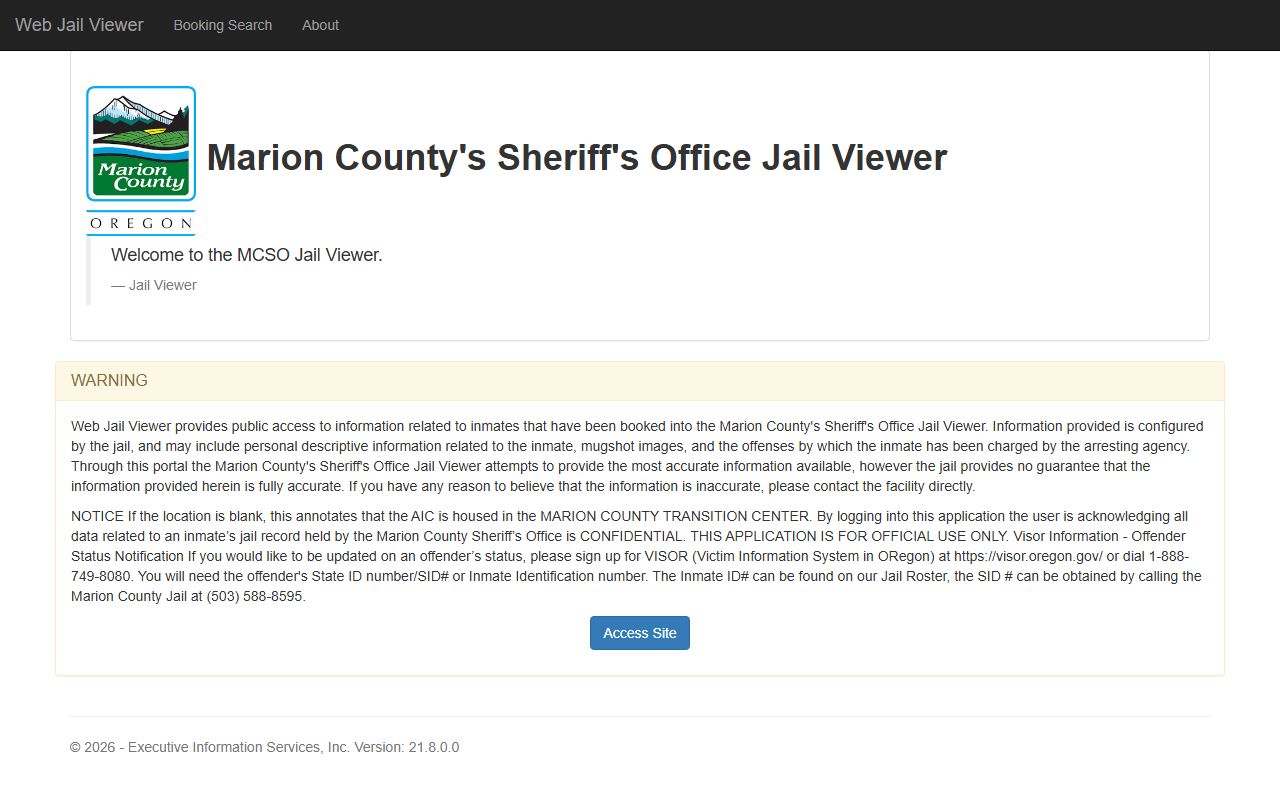
That jail source is useful for custody information, but formal court charges must be checked in the criminal case record.
Find Marion County Arrest Records
Use the Jail Viewer booking search to check current or recent booking information. The search fields include last name, first name, booking from date, and booking to date. The public instructions allow a percent sign wildcard when the exact spelling is unknown. For example, the research notes that users can search names beginning with a letter, ending with a letter, or with letters inside a name.
The jail side has its own limits. Jail Viewer says it may include personal descriptive information and offenses charged by the arresting agency, but the Sheriff's Office warns that it does not guarantee full accuracy and users should contact the facility directly if information appears inaccurate. If the public roster does not answer the question, the Sheriff's adult-in-custody page gives the jail phone channel. VISOR can be used for offender status notifications when the user has the State ID, SID, or inmate identification number.
| Booking Search Field | Type | Required | Notes |
|---|---|---|---|
| Last Name | Text | No | May be used alone; wildcard % allowed. |
| First Name | Text | No | Wildcard % allowed for uncertain spelling. |
| Booking From Date | Date | No | Start of booking date range. |
| Booking To Date | Date | No | End of booking date range. |
After a booking record is found, search the court case through OJD or OJCIN/OECI to verify filed charges. Jail offenses are arresting-agency information. Court charges are prosecutor-filed counts. If the person has moved from county jail to state custody or supervision, the Oregon Department of Corrections offender search is the statewide custody channel, not a substitute for court charge records.
The Marion County Sheriff's Office also advertises the MCSO InTheKnow app for anonymous tips and agency alerts through tip411. Research did not find an app-only inmate roster or warrant lookup. That means the app should not be treated as an arrest records database. Use it for the tip and alert function described by the Sheriff's Office, and use Jail Viewer, court records, DOC, or VISOR for record and custody questions.
The assigned image from the Jail Viewer booking search source shows the fields used to search Marion County arrest records by name or booking date.
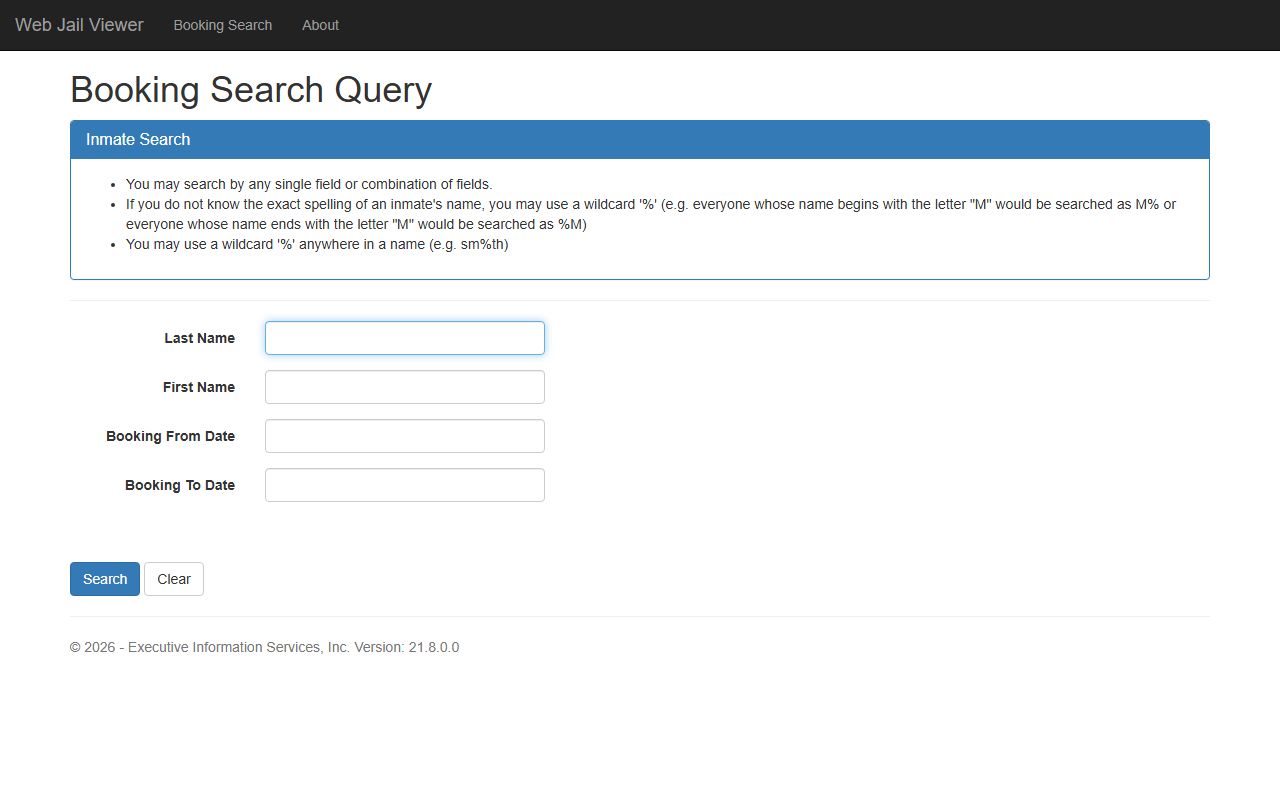
Search results should be treated as booking data until matched to a filed court case.
Booking Records vs Court Charges
The arrest record and the filed charge record answer different questions. Booking records show custody facts and the offenses reported at or near arrest. Court charges show what the District Attorney filed after review. One arrest can lead to no charge, one charge, several charges, reduced charges, amended charges, or dismissed charges. The court record is the better source for pleas, disposition, conviction, sentence, and court-ordered financial obligations.
The timing can create real differences. A jail booking may occur before the prosecutor has finished reviewing reports, witness information, or legal sufficiency. The court case may then open with different wording or different counts than the booking record. Later, a plea agreement, motion, dismissal, or trial verdict can change the record again. For that reason, the best practice is to treat Jail Viewer as a custody snapshot and the court register as the filed-charge history.
| Point of Comparison | Arrest / Booking Record | Court Charge Record |
|---|---|---|
| Created by | Sheriff, jail, or arresting agency workflow. | Prosecutor filing in court. |
| Shows | Custody status, booking data, and arresting-agency offenses. | Filed counts, court events, pleas, disposition, and sentence. |
| Can change | Custody and housing status may update. | Charges may be amended, reduced, dismissed, or resolved by judgment. |
| Best use | Current custody and booking lookup. | Formal charge status and case outcome. |
Charges After Arrest Documents
The court charge record usually starts with a charging document. Oregon research for this build did not provide a Marion-specific sample charging document, so the table uses the standard criminal case concepts needed to read the court file. The key point is local: the filed charge is a court record in Marion County Circuit Court, while booking data remains with the jail.
| Document Type | Filed By | What It Does |
|---|---|---|
| Complaint | Prosecutor or authorized charging process | Starts a criminal charge in court, often early in the case. |
| Information | District Attorney | States prosecutor-filed charges without relying on the booking label alone. |
| Indictment | Grand jury process | Brings charges after grand jury review in qualifying felony matters. |
Marion County Charge Status
Charge status is the part of the record that prevents mistakes. A filed charge may still be pending, may be amended, or may have ended in dismissal, plea, trial verdict, or sentence. Read each count separately. A case can have one charge dismissed and another charge convicted. The disposition line and judgment are more important than the first charge list.
| Status | What It Means |
|---|---|
| Pending | The charge remains active and has not reached final disposition. |
| Amended | The prosecutor or court record changed the charge from an earlier version. |
| Reduced | The charge was lowered to a lesser offense or different severity. |
| Dismissed | The charge ended without a conviction on that count. |
| Convicted | The charge ended in a guilty result, plea, or judgment. |
| Set aside | An eligible arrest, charge, or conviction was sealed after court approval under Oregon law. |
Note: Always match charge status to the final disposition before treating an arrest or filed charge as a conviction.
Marion County DA Charging Role
The Marion County District Attorney's Office is the local prosecutor's office. Research lists the DA office at 555 Court Street NE, Suite 3250, Salem, with weekday public hours and a main phone of 503-588-5222. The office mission includes promoting offender accountability, interpreting and enforcing law, responding to victims and the public, and working with justice-system partners.
The DA navigation includes victim assistance, juvenile matters, medical examiner, support enforcement, expungements, investigators, conviction integrity, and policy materials. Victim Assistance provides support during prosecution and sends case-status and disposition notifications. Those services help explain why charge records change over time, but the official filed charge and disposition remain in Circuit Court.
Public defense is part of the same pathway once charges are filed. Research lists the Public Defender of Marion County at 198 Commercial St SE, Suite 240, Salem, and the Oregon Public Defense Commission as the statewide public defense agency. Appointment of counsel, attorney appearances, and some motions may show in the court register. Those entries help explain who is acting in the case, but they do not turn the defense office into the records custodian.
The assigned image from the adult in custody lookup information source shows the Sheriff's routing for custody and community-corrections information.
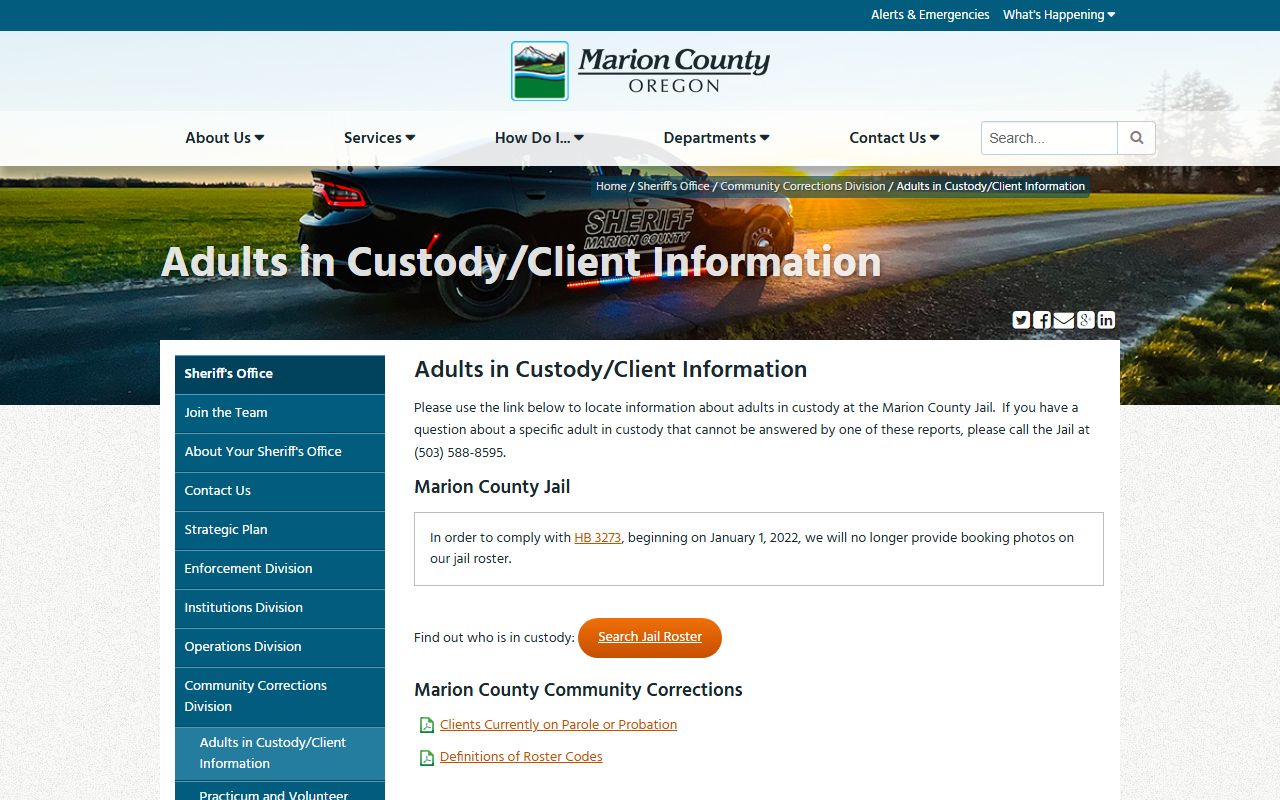
Custody lookup can help locate a person, but the DA and court record determine the formal charge path.
Charge vs Conviction
Marion County arrest records and court charges should not be read as the same as convictions. A person can be arrested and never charged. A person can be charged and later have that count dismissed. A conviction appears after a guilty plea, no-contest result treated as a conviction, trial verdict, or judgment on the charge.
| Point of Comparison | Charge | Conviction |
|---|---|---|
| Record stage | Filed after arrest or investigation. | Entered after plea, verdict, or judgment. |
| Meaning | The state accuses the person of an offense. | The court record shows a guilty outcome on the count. |
| Can be removed | May be dismissed or later set aside if eligible. | May be set aside only if Oregon law and the court allow it. |
| Where to verify | Charging document and Register of Actions. | Disposition, judgment, and sentence entries. |
Restricted Arrest and Charge Records
Oregon and Marion County access rules restrict some arrest and charge information. Juvenile records are handled through Juvenile Court and are restricted. Adoption, mental health, VAWA-covered, sealed, and set-aside records may be excluded from free public display. Personal identifiers, protected addresses, financial account information, and minor information may be redacted from public records.
Oregon's set-aside process is governed by ORS 137.225. Eligible arrests, charges, and convictions may be sealed after a motion in the court that handled the case. Eligibility depends on offense type, time since conviction or release, completion of sentence, and other statutory conditions. The research also found an expungements navigation item on the Marion County DA site.
Copy requests follow the court once a charge is filed. The Marion records request process asks for the case number and exact documents or hearing dates, and copy fees apply for standard, certified, exemplified, electronic, and audio records. If the question is only current custody, Jail Viewer or the jail phone line is the better first stop. If the question is whether a charge was filed, dismissed, convicted, or set aside, the court record and Records Department are the better sources.
The assigned image from the Oregon DOC offender search source shows the state custody lookup path for sentenced state custody or supervision.
DOC lookup can help with post-sentence custody status, but it does not replace the Marion County court charge record.